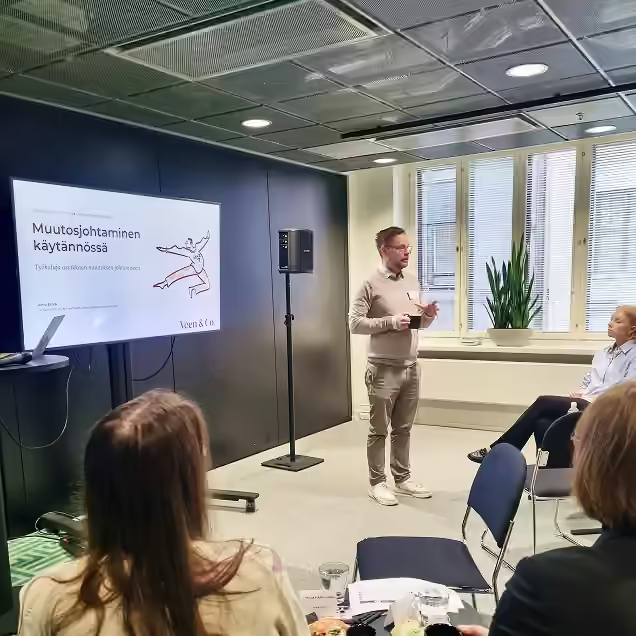
This was the question we explored at October's People Studio together with HR professionals, business leaders and organisational developers. We discussed participants' own experiences and looked at the core principles of change management.
One insight came up during the morning that many recognised from their own work: organisations often succeed in delivering the project, but not always the change itself. A system can be rolled out, a process renewed or an organisational structure updated, and people still carry on working the old way.
That is why successful change management is not primarily about managing a project. It is about helping people move from the old way of working to the new one.
Change management is above all about leading people
The discussions drew on the Prosci® change management framework, which is widely used to support organisational change around the world. Prosci is best known for its research, which has examined thousands of change initiatives to identify what separates successful changes from less successful ones.
Prosci approaches change from two perspectives. At the organisational level, you need clear goals, a plan, leadership and sponsorship. At the individual level, what matters is how people experience the change and adopt the new way of working as part of their own job.
This perspective is captured in the ADKAR model, according to which successful change is built on five stages: understanding why the change is needed (Awareness), wanting to take part in it (Desire), learning the new (Knowledge), being able to work in the new way in practice (Ability), and reinforcing the change so that it becomes part of everyday work (Reinforcement).
The key message of Prosci's research is simple: a technically successful project does not yet mean a successful change. Change happens only when people start using the new way of working.
Five observations on successful change management
Five practical principles came up during the session, and they show in almost every successful change:
- An organisation changes only when its people change.
- A change needs a visible and committed sponsor.
- Line managers play a key role in bringing the change into everyday work.
- Resistance is a natural part of change, not a sign of failure.
- Making the change stick is part of the change.
The discussions highlighted the role of the sponsor and line managers in particular. During a change, people watch above all how senior leaders act and what their own manager says about how the change will affect daily work. That is why successful change management is not a task for HR or the project team alone. It is a shared leadership task.
Not every change needs the same amount of change management
One of the most interesting discussions of the morning was about how organisations can allocate their change management resources sensibly. Many companies have several development projects, system renewals, organisational changes and new ways of working under way at the same time. In practice, it does not make sense to lead every change with the same model.
Sometimes clear communication is enough, and sometimes a light change plan is needed. The most significant changes, in turn, call for active sponsorship, leadership commitment, coaching for line managers and systematic change management.
To assess this, it is worth pausing on four questions:
- How many people's work does the change affect?
- How much will people's day-to-day work change?
- Can people work around the change in practice?
- What happens if adoption fails?
These questions help identify when good communication is enough and when success requires broader change management support.
Change only becomes real in everyday work
The morning's discussions returned several times to the same theme: change becomes real only when the new way of working shows in people's everyday work.
Although strategy, goals and decisions are made by senior leadership, employees most often experience change through their own manager. That is why a manager's ability to explain the reasons for the change, answer questions and support people in adopting the new is one of the most important success factors.
We were also reminded that resistance to change is a completely natural reaction. Rather than trying to remove it, it is worth listening to. Resistance often tells us that people need more information, clarity or support.
Thank you to all participants
A warm thank you to everyone who joined us for the active discussion, for sharing your experiences and for the good questions. Practical examples and peer insights are what make People Studio a conversation that everyone can take something away from into their own work.
People Studio will continue in future sessions on current themes in leadership, HR and organisational development. You are welcome to join us to discuss and learn together.